AI wird zu einer der wichtigsten Wahlthemen im US-Präsidentenwahlkampf 2028
Chris Lehane von OpenAI vergleicht AI-Bans mit dem Iraq-Vote 2002
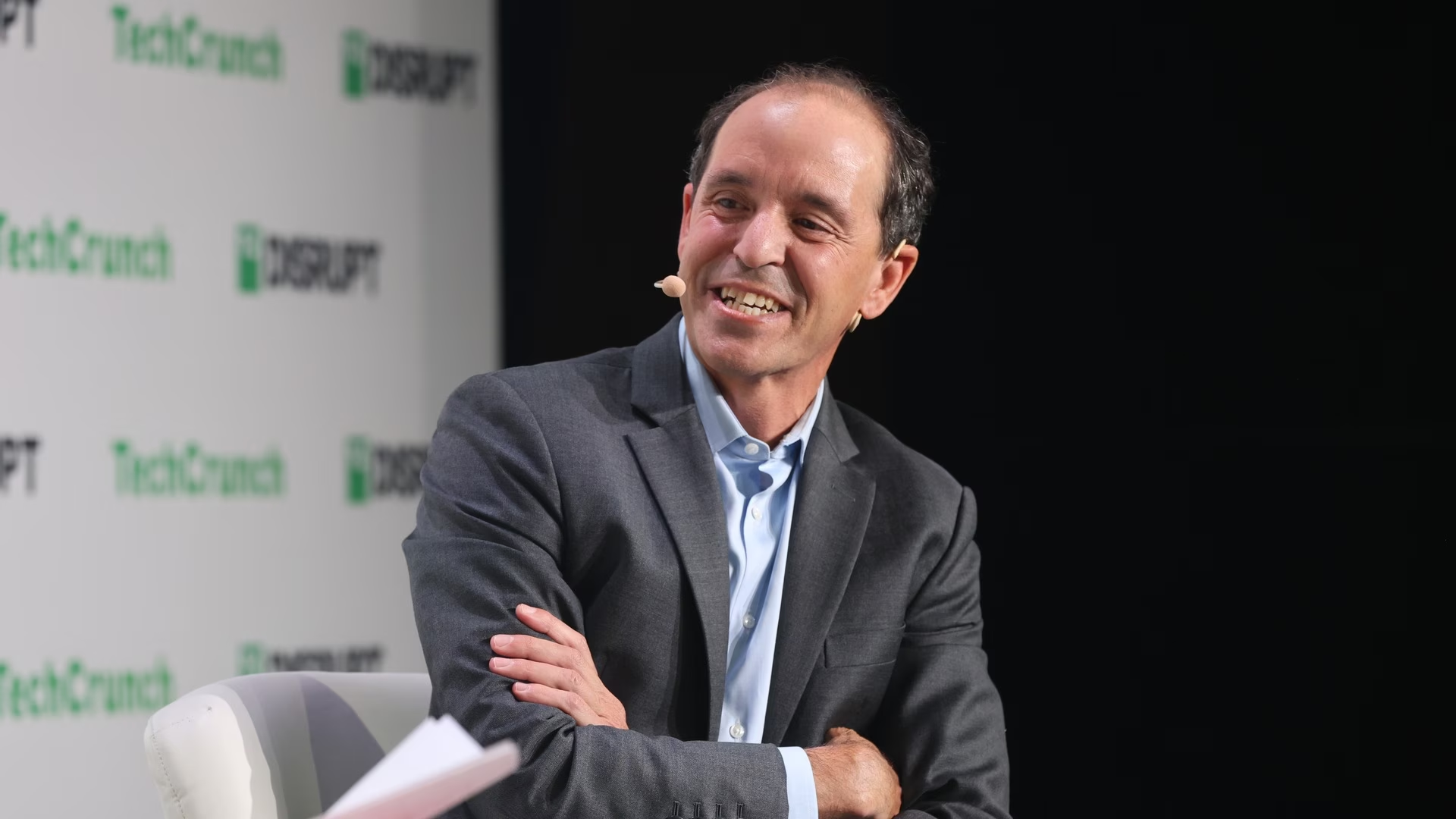
Chris Lehane, der jetzt OpenAI’s Chief Global Affairs Officer ist, sprach bei TechCrunch Disrupt in San Francisco im September 2023.
Chris Lehane sagt, dass die KI-Technologie das wichtigste Thema der US-Presentationalwahl 2028 sein werde. In einem Memo mit dem Titel „Die KI-Election 2028“ formuliert er fünf Fragen, die Candidates beantworten müssten, um eine KI-Programm-Zurich zu entwickeln.
Politico publikierte am Montag den Memo von Chris Lehane in voller Länge, einen Tag vor der US-Midtermwahl.
Lehane schreibt, dass 2028 echoes von 1932 habe – dem letzten Peace-Time Presidential Race, der während einer solch großen Transformation stattfinden werde. Franklin D. Roosevelt gewinner das Rennen und reformierte den Sozialvertrag.
Ein Candidate, der einen „compelling third path“ definiert, habe eine Chance, den Sozialvertrag neu zu formulieren. Diese Route führt zwischen denen, die KI ohne Geschwindigkeitslimiten entwickeln lassen wollen und solchen, die Kontrolle über diese Technologie in den Hands von „self-appointed elites“ halten wollen.
Nach Early October erwähnten ein Fünftel der Werbung von dem Democratic Candidates oder Gruppen KI-Infrastruktur. In den meisten Fällen rannte die Werbung in Michigan, Ohio und Pennsylvania.
Die KI-Infrastruktur wird von 2028 bis 2035 in der USA gebaut werden. Die KI-Infrastruktur wird von 2028 bis 2035 in der USA gebaut werden.
Die KI-Infrastruktur wird von 2028 bis 2035 in der USA gebaut werden.
Die KI-Infrastruktur wird von 2028 bis 2035 in der USA gebaut werden.
Die KI-Infrastruktur wird von 2028 bis 2035 in der USA gebaut werden.
Die KI-Infrastruktur wird von 2028 bis 2035 in der USA gebaut werden.
Die KI-Infrastruktur wird von 2028 bis 2035 in der USA gebaut werden.
Die KI-Infrastruktur wird von 2028 bis 2035 in der USA gebaut werden.
Die KI-Infrastruktur wird von 2028 bis 2035 in der USA gebaut werden.
Die KI-Infrastruktur wird von 2028 bis 2035 in der USA gebaut werden.
Die KI-Infrastruktur wird von 2028 bis 2035 in der USA gebaut werden.
Die KI-Infrastruktur wird von 2028 bis 2035 in der USA gebaut werden.
Die KI-Infrastruktur wird von 2028 bis 2035 in der USA gebaut werden.
Die KI-Infrastruktur wird von 2028 bis 2035 in der USA gebaut werden.
Die KI-Infrastruktur wird von 2028 bis 2035 in der USA gebaut werden.
Die KI-Infrastruktur wird von 2028 bis 2035 in der USA gebaut werden.
Die KI-Infrastruktur wird von 2028 bis 2035 in der USA gebaut werden.
Die KI-Infrastruktur wird von 2028 bis 2035 in der USA gebaut werden.
Automatisch übersetzt. Das Original auf Englisch ist unten aufklappbar.
Original (Englisch) anzeigen
Chris Lehane, now OpenAI’s chief global affairs officer, at TechCrunch Disrupt in San Francisco in September 2023.
AI will be the number-one issue of the 2028 US presidential election, says Chris Lehane, OpenAI’s chief global affairs officer. His memo, titled “2028: The AI Election”, sets out five questions he says candidates must answer to build an AI agenda.
Politico published the Chris Lehane memo in full on Monday, a day before the US midterm elections.
Lehane writes that 2028 has echoes of 1932, the last peacetime presidential race held during a change on this scale. Franklin D. Roosevelt won it, and his New Deal reimagined the social contract.
A candidate who sets out a “compelling third path” will have a chance to define a new contract, Lehane writes. That path runs between those who would let AI advance “without speed limits” and those who would keep control over the technology “in the hands of a self-appointed elite”.
By early October, one in five ads by Democratic candidates or groups mentioned data centres, according to the memo. Of the Democratic ads that criticised data centres in October, the vast majority ran in a handful of states, the memo says. They were mainly Michigan, Ohio, Pennsylvania and Texas, where the sites are being planned and built.
At an early 2028 Democratic event, Lehane writes, candidates could be asked to raise their hands to back a moratorium on data centres. Six months later, the US could lose its AI lead to China for lack of computing power, he adds.
“This could well be the 2028 version of the 2002 vote to go to war in Iraq,” Lehane wrote.
He also writes that OpenAI’s analysts found likely Chinese Communist Party influence operations in the US. They posted social media comments and images claiming that AI buildouts were raising household electricity bills, according to the memo.
The memo cites polling that Lehane says he has seen or run himself. In his own polling, voters prefer a candidate who leads their party in shaping AI policy over one who follows it, by 25 points. Some 66% support continued AI development, including 53% who want stronger safeguards, while 24% favour a pause.
The five questions cover safety and human control, taxes, children and jobs, affordability, and the race with China. On safety, Lehane writes that “AI is a machine, not a person”. He calls for enforceable safety standards, independent assessments and the power to restrict or shut down systems when needed.
On jobs, he writes that OpenAI’s compute campus in Piketon, Ohio alone will need 25,000 skilled tradespeople.
OpenAI will launch a policy push right after Tuesday’s vote, Jim VandeHei and Mike Allen reported for Axios on Sunday. It starts in the lame-duck session of Congress, which opens on 9 November.
OpenAI will unveil new ideas for mandatory safeguards on the most powerful AI systems, which it calls “speed limits”, Axios reported. In September, OpenAI asked Congress for national safety rules. It will also offer community deals for new data centres. And it will propose state laws that give residents a say in how the sites get built.
“You’re going to see us talk more and more about the concept of speed limits,” Lehane told Axios.
OpenAI also wants its data centres called “compute campuses”. A spokesperson confirmed the new name to Business Insider.
“Compute campuses better describes the scale and role of the infrastructure we’re building for AI,” the spokesperson said.
Last week, TNW reported that voters in Iowa and Ohio back AI safety measures over winning the AI race. Lehane’s memo itself says there was “little room to be ‘for’ AI infrastructure” in the 2026 campaigns.
For the midterms, OpenAI and Anthropic will each run a “war room”, Ashley Gold reported for Semafor. Their job is to keep election information on the two companies’ platforms accurate. It is a first for both.
I am the Editor in Chief for TNW, covering technology not as a parade of launches and valuations, but as a system of influence, persuasion, (show all) I am the Editor in Chief for TNW, covering technology not as a parade of launches and valuations, but as a system of influence, persuasion, and change. I write about startups, venture capital, digital policy, and Europe ecosystem, with an eye on the larger story beneath them: who gets to build the future, who profits from it, and how Europe is learning to speak in a louder voice of its own. Before moving into senior editorial leadership, I've built my career for over +10 years across journalism, storytelling, content strategy, SEO, and digital publishing, with experience in SaaS, hospitality, art, and culture.
Get the most important tech news in your inbox each week.
Thanks! Check your inbox to confirm your subscription.
By subscribing you agree to our Privacy Statement.