Aircall co-founder Olivier Pailhès returns as CEO to push AI voice agents
Olivier Pailhès, who co-founded Aircall in Paris in 2014, has returned as its chief executive. He replaces Scott Chancellor and takes over a business phone company that now sells AI voice agents. Aircall announced the change on Thursday in a press release. Pailhès was Aircall CEO from its founding
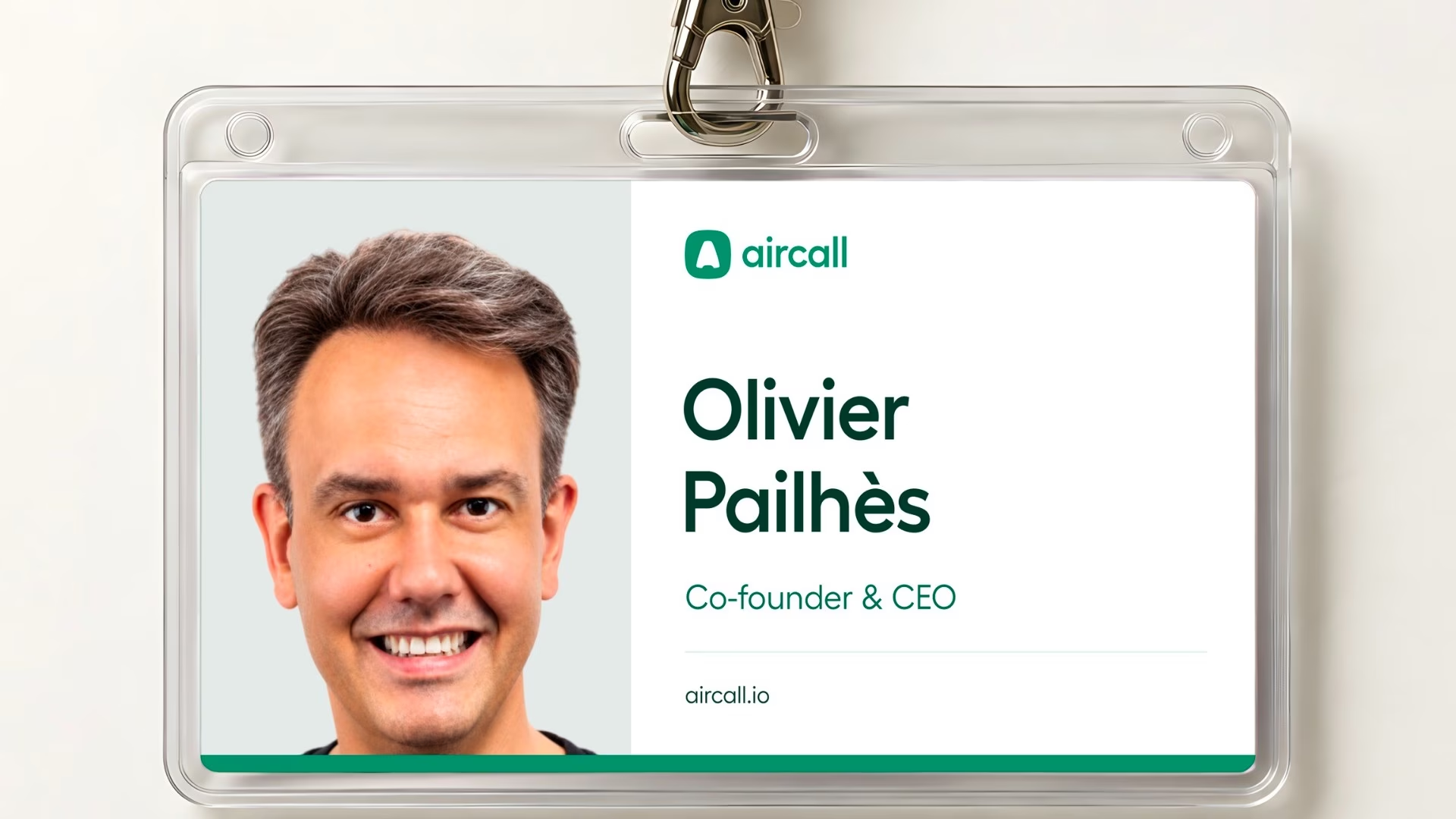
Olivier Pailhès, Aircall’s co-founder, is back as chief executive
Olivier Pailhès, who co-founded Aircall in Paris in 2014, has returned as its chief executive. He replaces Scott Chancellor and takes over a business phone company that now sells AI voice agents.
Aircall announced the change on Thursday in a press release. Pailhès was Aircall CEO from its founding until 2023 and has stayed on its board since then. The release does not say why Chancellor is leaving or what he will do next.
“Twelve years after we started Aircall, AI has handed us a rare opportunity; to bring voice back to the centre of customer conversations,” Pailhès said in the release.
Aircall says it now has more than 24,000 customers in over 100 countries. Its annual recurring revenue has passed $250m. Its software lets sales and support teams handle calls, SMS and WhatsApp messages in one place. It connects to more than 250 other business tools.
Pailhès started the company with Jonathan Anguelov, Pierre-Baptiste Béchu and Xavier Durand. He led its expansion across Europe, the United States and Asia-Pacific. Before Aircall, he worked at Boston Consulting Group and ArcelorMittal.
Aircall began with cloud phone systems for businesses. It added AI call transcription and then live voice agents, which answer calls on their own. The company launched its AI Voice Agent in April 2025.
This year it bought two startups to build on that. In May, Aircall bought Vogent, a voice AI company. It then bought Piper AI, which updates CRM records and scores sales deals from customer conversations.
Customers can now reach Aircall’s agents by phone, messaging or chat, according to the company. The agent keeps the context of the conversation across channels. Pailhès said the agents should take the repetitive work. Staff then have more time for customers who need a person.
“Customers hand us their phone number, which means they hand us their reputation,” Pailhès said.
The release says some voice agents drop calls, mishear addresses or send customers to the wrong queue. Such an agent costs a business more than it saves, it says. Pailhès said call quality and reliability are what make an AI voice agent usable at all.
Other voice AI companies have made moves too. On Thursday, Deepgram announced it is buying Pipecat maker Daily. Earlier this year, Vapi raised a $50m Series B for its enterprise voice agents. Zendesk and Sierra said AI agents should be paid per result, not per seat.
Cristian Dina is the CRO at The Next Web. He has interviewed 300+ industry leaders and authored the book King of Networking, establishing hi (show all) Cristian Dina is the CRO at The Next Web. He has interviewed 300+ industry leaders and authored the book King of Networking, establishing himself as one of the most connected and respected voices in the ecosystem. At just 23 years old, Cristian was included in the Forbes 30 Under 30 2025 list, representing a new generation of tech builders, bold thinkers who move fast, build with purpose, and create real impact.
Get the most important tech news in your inbox each week.
Thanks! Check your inbox to confirm your subscription.
By subscribing you agree to our Privacy Statement.