Iowa and Ohio voters back AI safety measures over winning the AI race
Voters in Iowa and Ohio want AI safety rules even if the US is not always first in the AI race, a new poll from a Republican pollster finds. Days before the US midterm elections, the country’s biggest union federation says it is writing its own AI bill. Inquire, a firm run by Republican pollster […
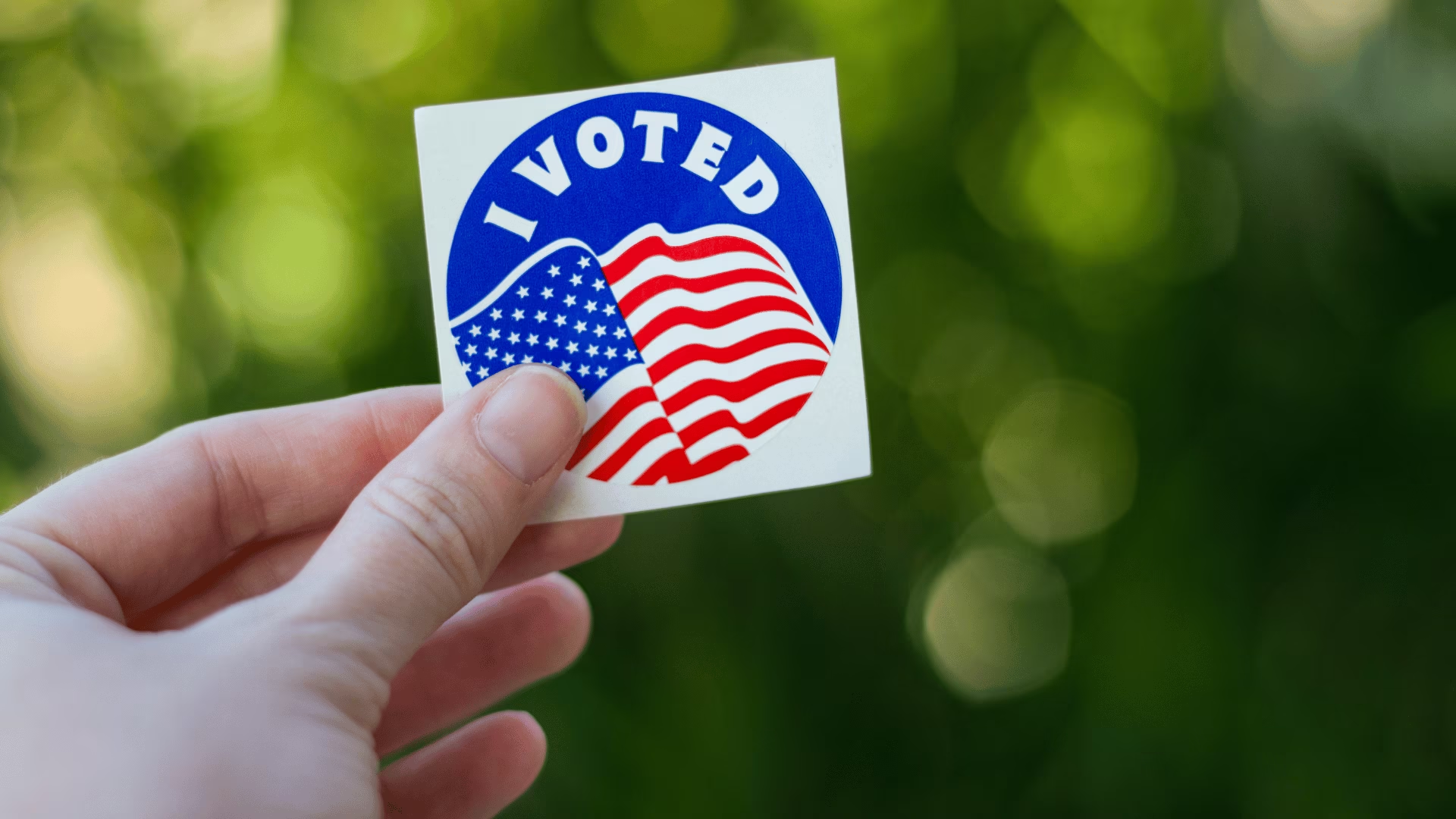
Voters in Iowa and Ohio want AI safety rules even if the US is not always first in the AI race, a new poll from a Republican pollster finds. Days before the US midterm elections, the country’s biggest union federation says it is writing its own AI bill.
Inquire, a firm run by Republican pollster Rob Schmidt, surveyed 501 likely voters in Iowa and 504 in Ohio from 19 to 22 October. Ashley Gold reported the results first for Semafor. Inquire’s polling memo gives a margin of error of 4.4 points in each state. Both states hold Senate races that Republicans are trying to keep.
In both states, 67% of voters said the US should pass reasonable AI safety measures even if it is not always first in the global AI race. In Iowa, 24% preferred to put innovation first with fewer rules, and in Ohio 26% did.
The poll tested ten proposals, and each won at least 73% support in both states. Keeping the most dangerous AI out of enemy hands scored highest, at 94% in Iowa and 93% in Ohio. Stronger parental controls followed, at 90% and 93%.
Pre-deployment government safety testing drew 85% and 87%. Requiring chatbots to say they are AI drew 81% and 85%. Banning chatbot relationships with minors and banning self-harm instructions scored lowest, at 73% to 77%.
The two parties split on AI itself but not on the rules, the memo says. Republicans view AI more favourably than Democrats. Still, Republicans chose safety measures over fewer regulations, by 50% to 39% in Iowa and 56% to 38% in Ohio.
Voters are not sure which party to trust. In Iowa, 43% picked Republicans and 43% Democrats. In Ohio, Republicans led by 43% to 39%.
“Candidates who champion common-sense safety measures stand to benefit, while those who oppose them risk political backlash,” Inquire wrote in the memo.
More than seven in ten voters in both states said they would be more likely to back a Senate candidate who supports AI safety measures. Fewer voters liked AI than disliked it: 37% to 44% in Iowa and 36% to 44% in Ohio. The memo does not say who paid for the poll.
Polling on data centres shows a similar mood. In a Heatmap Pro poll run by Embold Research this month, 71% of people surveyed said they would oppose a data centre near where they live, Robinson Meyer reported for Heatmap.
Support has slightly recovered among Republicans, the poll found. Some 34% would back a data centre nearby, up from 23% in August.
The White House has put the focus on keeping the US ahead. President Donald Trump has renamed AI “super intelligence” and called people who still say artificial intelligence “the enemy”.
“American leadership in super intelligence is essential for our national security, economic prosperity, and the quality of life of the American people,” White House spokesperson Liz Huston told Semafor.
“President Trump is committed to ensuring America continues to lead the world in super intelligence while protecting American consumers,” Huston said.
This month, his administration’s AI task force told labs to report rogue behaviour by their models.
The AFL-CIO, the largest US federation of labour unions, is drafting what it calls “gold-standard” AI legislation. It hopes lawmakers will pass it in the next Congress, its president, Liz Shuler, told Eleanor Mueller and Ashley Gold of Semafor.
The bill will cover worker protections, privacy and data protection, and the economic impact of AI, Shuler said. It will be the federation’s top priority.
“The changes that are happening in the workplace that feel so out of control [have] people feeling extremely anxious and uncertain,” Shuler said.
She called public pushback against data centres the way that anxiety is showing up. She expects job losses caused by AI to weigh on politics even more.
“Data centers will be built. It’s a matter of if they’re built with good union jobs and a high-standard approach,” Shuler said.
The federation’s AI principles already have backers in both parties. In April, Republican congressman Brian Fitzpatrick and Democratic senator Mark Kelly led a letter backing them. It asked the administration to build worker protections into federal AI policy.
In Ohio, Republican senator Bernie Moreno has accused Anthropic’s Dario Amodei of ‘alarmist’ AI talk. The midterms are on 3 November.
I am the Editor in Chief for TNW, covering technology not as a parade of launches and valuations, but as a system of influence, persuasion, (show all) I am the Editor in Chief for TNW, covering technology not as a parade of launches and valuations, but as a system of influence, persuasion, and change. I write about startups, venture capital, digital policy, and Europe ecosystem, with an eye on the larger story beneath them: who gets to build the future, who profits from it, and how Europe is learning to speak in a louder voice of its own. Before moving into senior editorial leadership, I've built my career for over +10 years across journalism, storytelling, content strategy, SEO, and digital publishing, with experience in SaaS, hospitality, art, and culture.
Get the most important tech news in your inbox each week.
Thanks! Check your inbox to confirm your subscription.
By subscribing you agree to our Privacy Statement.