Nvidia says European partners are adopting DSX to cut AI factory water use
European infrastructure companies are building AI data centres on Nvidia DSX, Nvidia said on Wednesday at its GTC Berlin conference. The chipmaker says the blueprint can cut cooling water use to almost zero. The news came a day after Germany signed an AI partnership with Nvidia at a Berlin investme
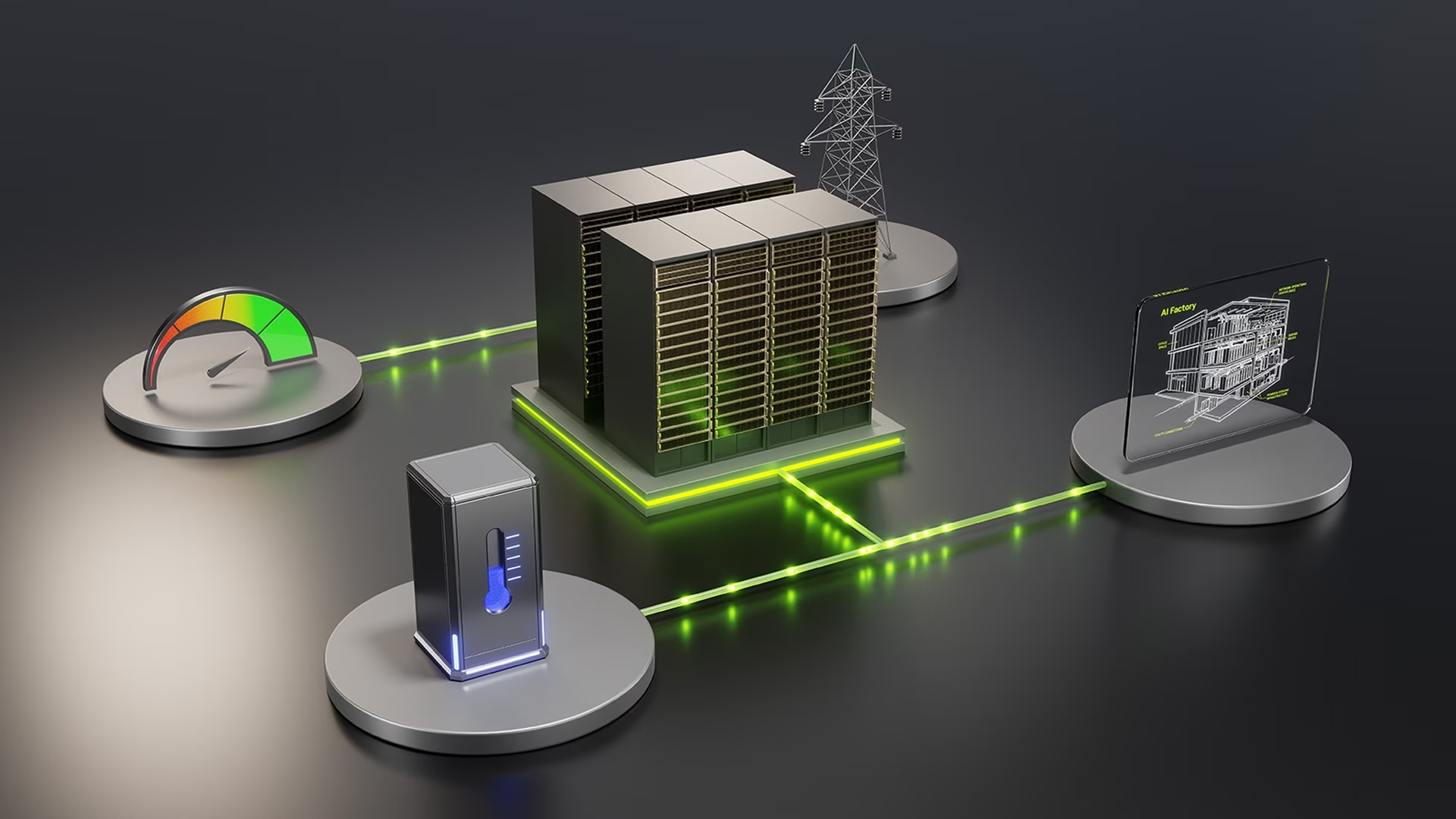
European infrastructure companies are building AI data centres on Nvidia DSX, Nvidia said on Wednesday at its GTC Berlin conference. The chipmaker says the blueprint can cut cooling water use to almost zero.
The news came a day after Germany signed an AI partnership with Nvidia at a Berlin investment summit.
Nvidia calls these sites AI factories: data centres built to train and run AI models at scale. DSX is its reference design, a set of plans and software that treats chips, networking, power, and cooling as one system. Nvidia first presented the platform at GTC Taipei on May 31, 2026.
The water savings come from closed-loop liquid cooling: coolant runs past the chips, then releases heat to the outside air through dry coolers instead of evaporating water.
The company said a two-gigawatt site built this way could save 54 million litres of water a day. Local weather decides whether extra cooling is needed on the hottest days, the company added.
Nvidia said a DSX tool called MaxLPS can produce the same AI output with up to 30% less electricity. London-based Nscale tested it on four racks of GB300 servers at its Iceland site, and Nvidia said inference throughput rose 49% within the same 264-kilowatt power budget.
Nscale, which is also building a data centre in Portugal, is using DSX to make digital models of both sites before construction. Its chief executive, Josh Payne, put the case in one line.
“Europe’s AI ambitions demand that we make every megawatt count,” Payne said.
A wider group of European engineering firms is designing parts for the platform. Siemens is simulating power, cooling and noise.
Schneider Electric is publishing power and cooling designs, and Dassault Systèmes is building digital twins of Vertiv equipment. ABB, Siemens Energy, Hitachi Energy and Trane Technologies are also taking part.
In the UK, a trial with National Grid and cloud firm Nebius tested how a cluster of Nvidia chips responds to grid strain. Nvidia said the cluster cut its power draw by up to 40% during simulated grid events while critical work kept running.
“Europe’s technology leadership depends on how efficiently we turn power and infrastructure into intelligence,” said Warren Barkley, who leads DSX product management at Nvidia.
Nvidia gave no dates for when the new features will be generally available. Several of its DSX operating software tools are in developer preview.
I am the Editor in Chief for TNW, covering technology not as a parade of launches and valuations, but as a system of influence, persuasion, (show all) I am the Editor in Chief for TNW, covering technology not as a parade of launches and valuations, but as a system of influence, persuasion, and change. I write about startups, venture capital, digital policy, and Europe ecosystem, with an eye on the larger story beneath them: who gets to build the future, who profits from it, and how Europe is learning to speak in a louder voice of its own. Before moving into senior editorial leadership, I've built my career for over +10 years across journalism, storytelling, content strategy, SEO, and digital publishing, with experience in SaaS, hospitality, art, and culture.
Get the most important tech news in your inbox each week.
Thanks! Check your inbox to confirm your subscription.
By subscribing you agree to our Privacy Statement.