Spain’s opposition posts AI deepfakes of Sánchez’s wife before election
Spain’s main opposition party has posted a campaign video built with AI deepfakes. In it, likenesses of people linked to Prime Minister Pedro Sánchez’s Socialists appear to confess to wrongdoing. The conservative People’s party (PP) shared it on 21 October, five weeks before the 29 November general
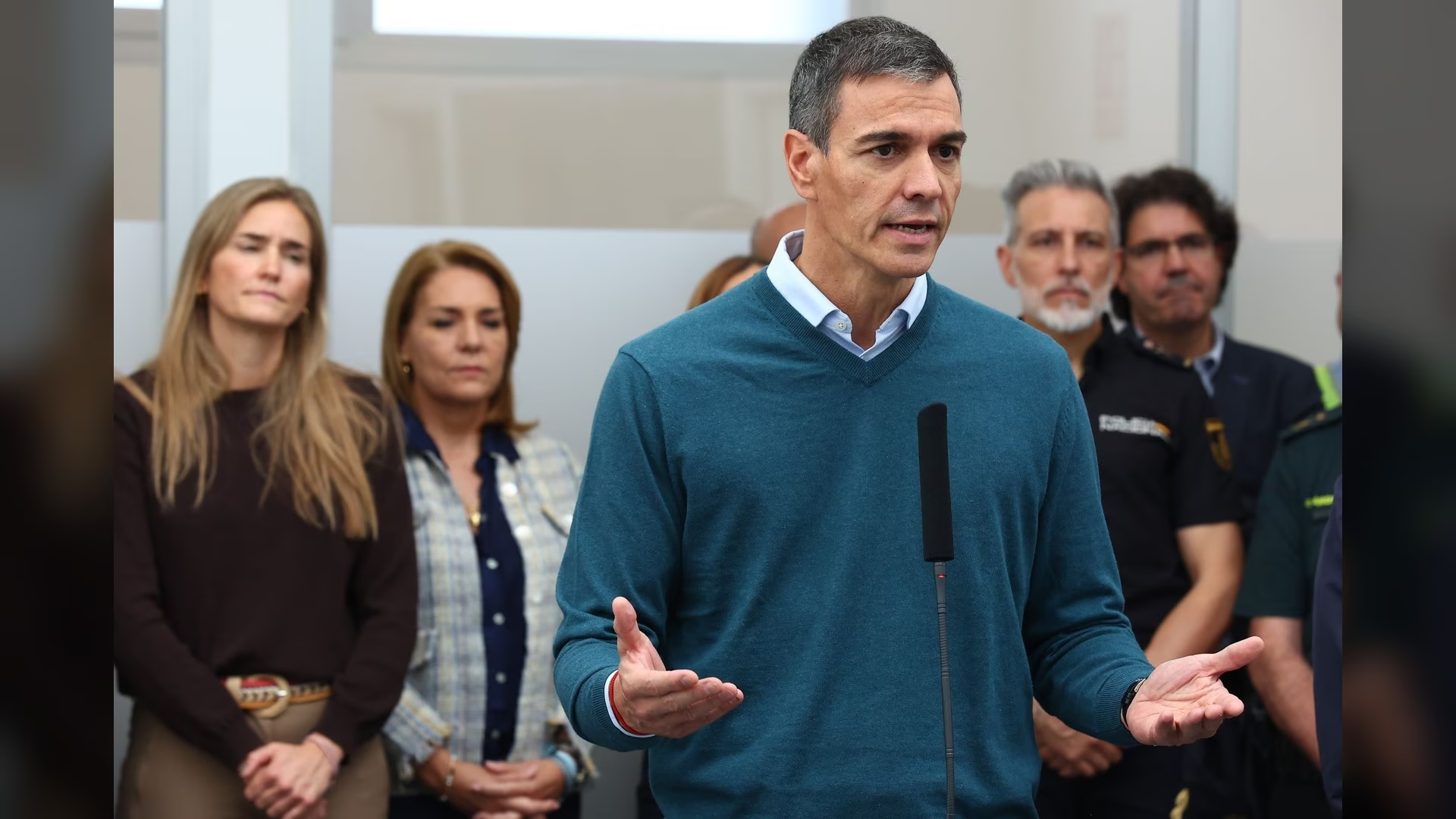
Pedro Sánchez at the emergency command post in Oliva, Valencia, on 20 October 2026
Spain’s main opposition party has posted a campaign video built with AI deepfakes. In it, likenesses of people linked to Prime Minister Pedro Sánchez’s Socialists appear to confess to wrongdoing. The conservative People’s party (PP) shared it on 21 October, five weeks before the 29 November general election.
By Friday the video had nearly 2 million views. Ashifa Kassam reported for the Guardian that it has set off a wider debate in Spain about AI in politics. The PP has defended the video as a way to point out Socialist hypocrisy.
An AI version of Sánchez’s wife, Begoña Gómez, talks about getting a university post thanks to her husband’s job. A deepfake of the former Socialist prime minister José Luis Rodríguez Zapatero talks about hiding jewellery in a safe. Both lines refer to ongoing investigations in which Gómez and Zapatero deny any wrongdoing. Other figures appear to admit to soliciting prostitutes and taking kickbacks.
The PP posted it on X with the words “Sí, son zurdos” (“Yes, they are left-handed”). That quoted a post in which Sánchez said he was left-handed. An AI label sits at the bottom in tiny, nearly transparent text, the Guardian reported.
Partido Popular (@ppopular) October 21, 2026
Óscar López, Spain’s digital transformation minister, called the video “a colossal lie” in an interview with TVE.
“It’s very easy for anyone who isn’t used to AI to confuse that video with reality. And call me crazy, but that seems extremely serious to me.” Óscar López, Spain’s digital transformation minister
On Friday, Leire Díez filed a court complaint against the PP. She is a former Socialist party member whose likeness appears in the video. She reportedly accuses the party of defamation and digital identity theft, and wants the video taken down at once.
Most of the nine legal experts consulted by El País said the video was not illegal. The PP had marked it as AI-made, and its tone was political satire.
“Given the context, everyone knows those people didn’t say those things.” Íñigo Navarro, Comillas Pontifical University, to El País
Juan Antonio Lascuraín, a criminal law professor at the Autonomous University of Madrid, said legality was only one question. Whether the video was appropriate or ethical was another.
José Javier Olivas researches AI bias and disinformation at Spain’s National University for Distance Education. He called the video a “red line” for how campaigns usually run. Putting words in other people’s mouths “qualifies for disinformation”, he told the Guardian.
Borja Sémper of the PP told reporters the video was not meant to deceive anyone.
“If there had been malicious intent to make people believe that the characters who appear there are real, then we’d have a problem. But everyone can see that this is a way of using digital tools to highlight the hypocrisy in which the Socialist party operates.” Borja Sémper, PP
Political deepfakes have surfaced elsewhere too. Brazil set out to define a deepfake before its October vote. Italy’s Giorgia Meloni has filed to trademark her voice. In the UK, Meta’s Oversight Board ordered the company to remove a deepfake of a local councillor.
Most polls suggest the PP will win the election but will need the far-right Vox party to form a government, according to the Guardian.
I am the Editor in Chief for TNW, covering technology not as a parade of launches and valuations, but as a system of influence, persuasion, (show all) I am the Editor in Chief for TNW, covering technology not as a parade of launches and valuations, but as a system of influence, persuasion, and change. I write about startups, venture capital, digital policy, and Europe ecosystem, with an eye on the larger story beneath them: who gets to build the future, who profits from it, and how Europe is learning to speak in a louder voice of its own. Before moving into senior editorial leadership, I've built my career for over +10 years across journalism, storytelling, content strategy, SEO, and digital publishing, with experience in SaaS, hospitality, art, and culture.
Get the most important tech news in your inbox each week.
Thanks! Check your inbox to confirm your subscription.
By subscribing you agree to our Privacy Statement.