Three insights you may have missed from theCUBE’s coverage of Workiva’s Amplify event
Enterprise AI governance is moving into the data, workflows and controls that determine what automated systems can do. As agents take on consequential work in finance, audit, compliance and sustainability, organizations need results that are grounded in business context, traceable to their sources
SHARE Coverage from SiliconANGLE's livestreaming video studio UPDATED 21:41 EDT / OCTOBER 26 2026
Enterprise AI governance is moving into the data, workflows and controls that determine what automated systems can do. As agents take on consequential work in finance, audit, compliance and sustainability, organizations need results that are grounded in business context, traceable to their sources and governed by clear accountability.
TheCUBE’s preview of Workiva’s Amplify event highlighted the controls needed as AI shifts from recommending actions to taking them. Trustworthy automation also depends on connecting information with the business conditions surrounding it, according to theCUBE Research’s Krista Case.
“What I’m looking at as Workiva’s bigger opportunity is creating that context and being that connective tissue across those disparate platforms and bringing in that more tribal knowledge … to make sure that as we are starting to ask AI to actually execute functions, it can be trusted because it does increasingly have that context behind it,” she said. “They are historically very strong in things like compliance and reporting and very regulated and audited workflows. They are beginning to make some steps into areas like sustainability.”
Case and co-host Alison Kosik spoke with executives and practitioners at Workiva’s Amplify event, during an exclusive broadcast on theCUBE, SiliconANGLE Media’s livestreaming studio. They explored how AI agents are changing accountability, how Workiva is redesigning governed workflows and how organizations are determining which business processes are ready for automation. (* Disclosure below.)
Here’s theCUBE’s complete video discussion with Krista Case and Alison Kosik:
Here are three insights you may have missed from theCUBE’s coverage of Workiva’s Amplify event:
As AI agents move from assisting employees to carrying out regulated work, governance must extend beyond the quality of the underlying data. Companies also need an auditable record that supports accountability after a task is completed, according to Case.
“We need to understand things like: Where did this information and … these insights come from? Who approved a particular action? Can you maybe trace what happened if an AI agent is taking an action on your behalf?” Case said. “When you think about finance and these other regulated processes, it’s not really good enough for the action or the response to just look plausible. We have to really make sure that it can be substantiated.”
The harder design question is how much independence to grant an agent without surrendering meaningful oversight. The answer will depend on the risk and business use case, with monitoring and escalation helping organizations maintain control.
“What’s interesting is that going back to the conversation around speed, if a human has to review and approve every action, then really the whole point or much of the value is moot,” she said. “We need to kind of make decisions around when AI is assisting a human, when it can execute on its own [and] when it needs approval. I do think that some of these boundaries are still being defined, and I think they’re going to evolve and change over time, especially as the business use cases evolve.”
Here’s theCUBE’s complete video analysis with Krista Case and Alison Kosik:
Workiva’s 2026 Midyear Executive Benchmark Survey exposes a central challenge for enterprise AI governance: the gap between confidence and readiness. Eighty-four percent of surveyed executives were at least somewhat confident in AI outputs appearing in annual reports without human review, yet only 11% said their data quality was sufficient for AI use. Established financial controls can help organizations make AI-assisted reporting more accountable by documenting four elements: where data originated, who touched it, what happened to it and how it was reviewed and approved. That accountability remains necessary as AI accelerates reporting, according to Steve Soter, vice president and industry principal at Workiva.
“It actually makes it even more important because accelerating a process, if you don’t have it grounded by … those four things, then speed doesn’t become an asset,” he said. “It really becomes a liability. It becomes a risk.”
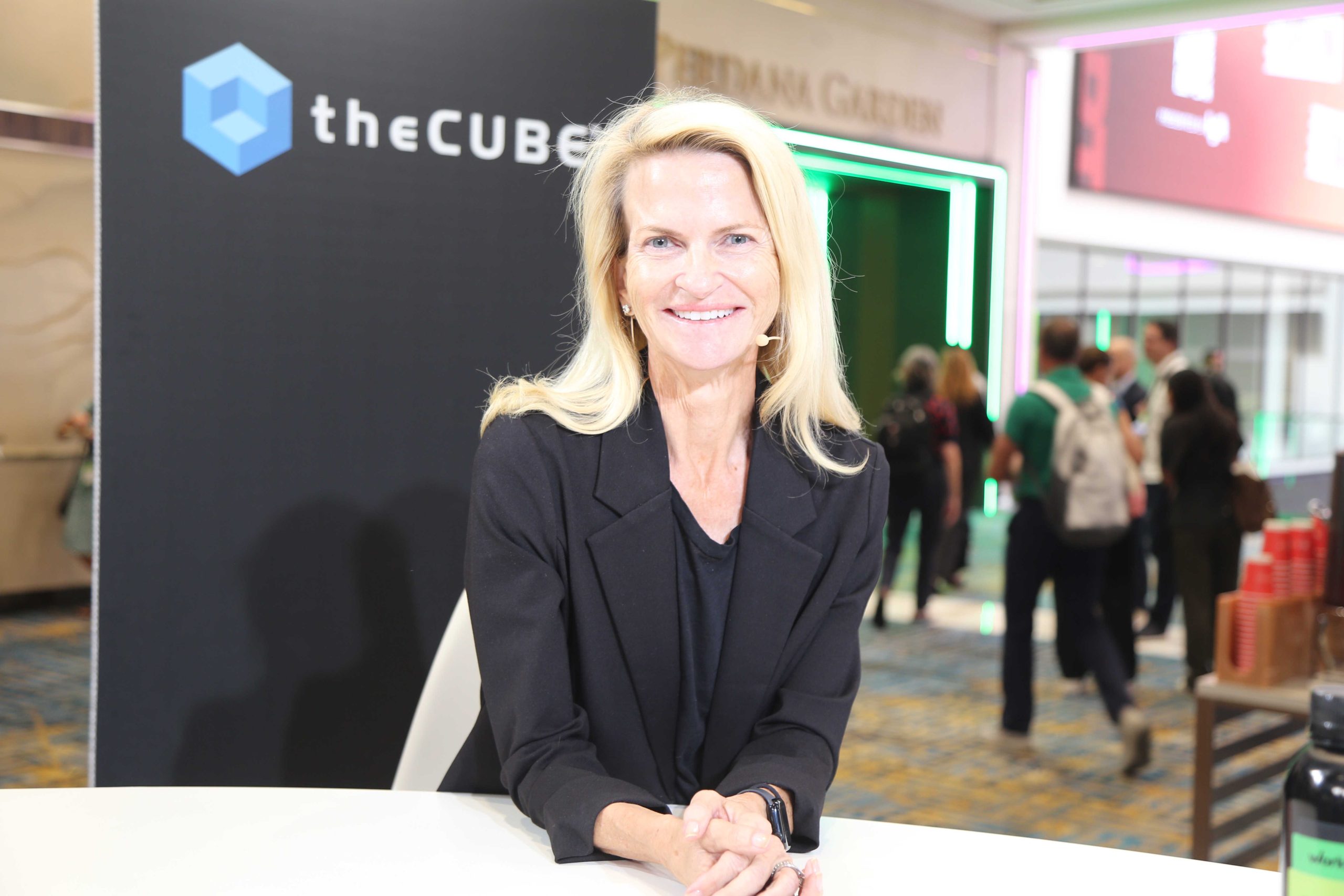
With that foundation in place, governance can support broader workflow redesign rather than slow it down. Agent Studio gives business users a no-code way to build and customize agents for their own processes, and early teams developed useful agents within days, according to Kim Huffman (pictured), chief information officer of Workiva. The company is applying an outcome-first approach internally. Employees across functions define a shared result, then determine where agents can perform parts of the work.
“I think AI is a fundamental technology that’s going to reshape the landscape of technology portfolios in every organization,” she said. “When you think of it as a bolt-on capability, you’re probably going to get bolt-on outcomes.”
Here’s theCUBE’s complete video interview with Steve Soter:
At HP Inc., sustainability data supports regulatory responses, customer requests and product decisions across a business that sells in more than 180 countries. That scale makes source consistency, assurance and sign-offs essential, according to Jen Huffstetler, senior vice president, chief sustainability officer and global market access at HP, and Kristen Siemen, senior advisor at McKinsey & Company Inc.
“If I think back to my time at General Motors, we ran the exact same processes for sustainability data and reporting that we did for financial,” Siemen said. “So, internally, our reviews, our assurance, the process and the sign-offs were all consistent.”
Consistent standards don’t mean every process is equally ready for automation. At Accel Entertainment Inc., near-term adoption is focused on Securities and Exchange Commission reporting and enterprise resource planning systems, where teams understand the data lineage and can involve auditors early. It’s critical to rate individual disclosures by risk before deciding whether they’re suitable for AI, according to Christie Kozlik, chief accounting officer at Accel.
“What is the input that I am feeding into this AI? What is the output that I’m expecting? What is the root cause that I’m trying to solve for?” Kozlik said. “Knowing those inputs, outputs and expectations becomes so important.”
Readiness also determines the pace of adoption. At Newell Brands Inc., internal audit helps distinguish lower-risk deployments, such as customer order-status agents, from agents working on fixed-asset accounting. Audit also works with business and technology teams as those deployments advance, according to Keri Tracy, vice president and chief audit executive of Newell Brands.
“I think a lot of companies don’t understand the concept of change management well enough to understand that if you don’t bring the people along with you, you could have the best plan, you could have the best technology, and it won’t work,” she said. “I think a lot of transformations fail because they don’t bring the people along.”
Here’s theCUBE’s complete video interview with Keri Tracy:
To watch more of theCUBE’s coverage of Workiva’s Amplify event, here’s our complete video playlist:
(* Disclosure: TheCUBE is a paid media partner for Workiva’s Amplify event. Sponsors of theCUBE’s event coverage do not have editorial control over content on theCUBE or SiliconANGLE.)
Support our mission to keep content open and free by engaging with theCUBE community. Join theCUBE’s Alumni Trust Network, where technology leaders connect, share intelligence and create opportunities.
Founded by tech visionaries John Furrier and Dave Vellante, SiliconANGLE Media has built a dynamic ecosystem of industry-leading digital media brands that reach 15+ million elite tech professionals. Our new proprietary theCUBE AI Video Cloud is breaking ground in audience interaction, leveraging theCUBEai.com neural network to help technology companies make data-driven decisions and stay at the forefront of industry conversations.
Intel buys quantum software pioneer Classiq for $2.2B
Cutting both ways: AI sharpens systems protection while opening new exploits for malicious actors
OpenAI launches GPT-6.1 Terra for faster, better-performing AI agents at half the price
Migration to safety: Three insights you may have missed from theCUBE’s coverage of DigiCert’s World Quantum Readiness Day 2026
Autonomous excavator startup Bedrock Robotics picks up $600M in funding
Fortinet extends FortiGate firewalls into AI security and adds new FortiAIGate features
EMERGING TECH - BY MIKE WHEATLEY. 1 MINUTE AGO
SECURITY - BY MARK ALBERTSON. 2 HOURS AGO
EMERGING TECH - BY MARIA DEUTSCHER. 2 HOURS AGO
© 2026 SiliconANGLE Media Inc. All rights reserved.