Tiny magnetic vortices could help computers work more like your brain
Scientists have filmed tiny magnetic vortices called skyrmions melting out of an organized lattice for the first time, revealing new ways to manipulate these unusual structures. The breakthrough could help make brain-like computers a reality, potentially enabling dramatically smaller and more energy
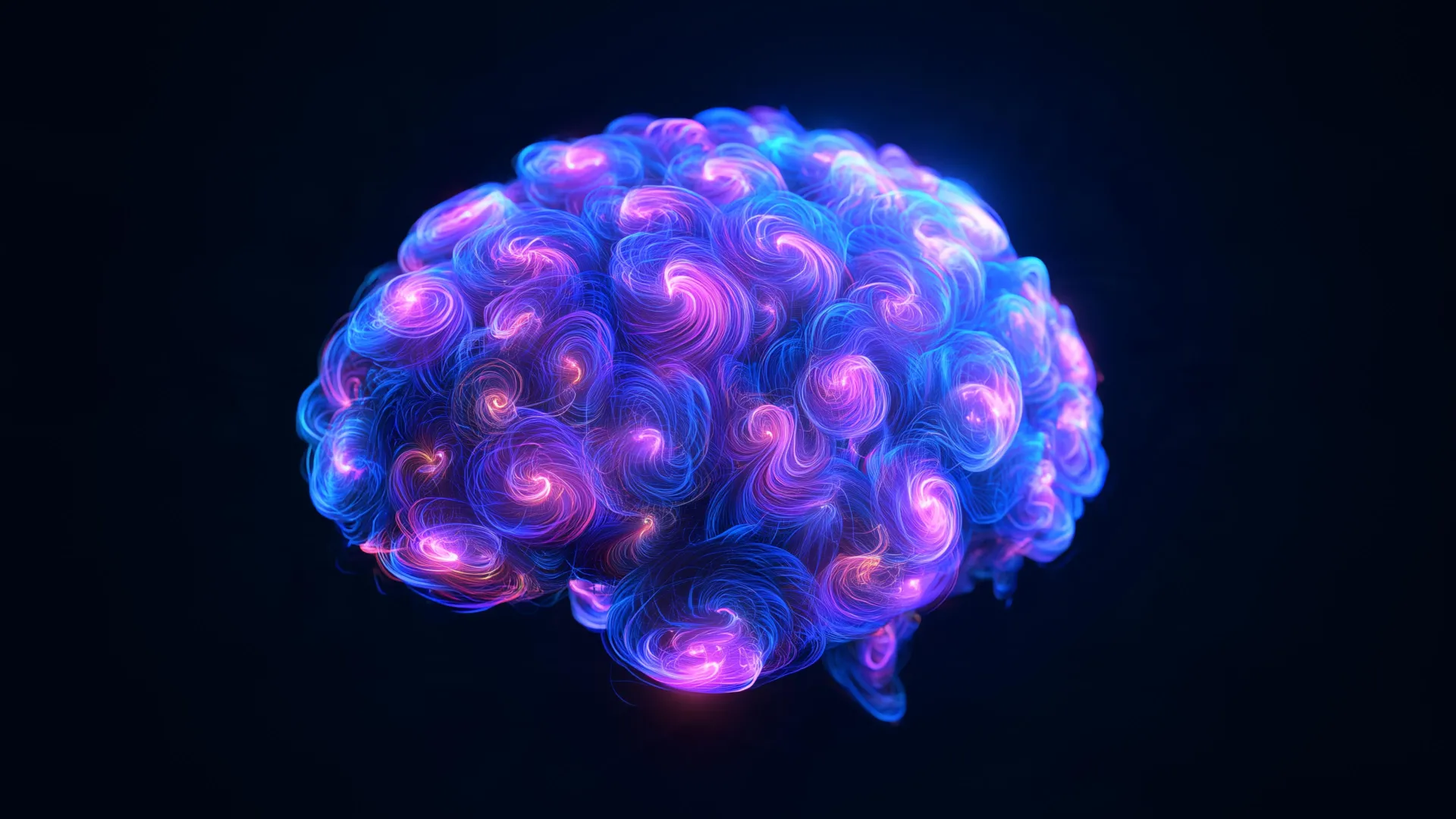
Tiny magnetic structures called skyrmions could help pave the way for a new generation of computers that process information more like the human brain while using far less electricity. Although most people have never heard of skyrmions, these microscopic magnetic vortices may eventually play an important role in how computers store and process data.
A study published in the journal Nature Nanotechnology provides new insights into how skyrmions behave and how scientists can control them. The findings could help researchers develop smaller, more efficient computing systems and advance emerging quantum technologies.
Most of the research was conducted at the Institute of Physics at Johannes Gutenberg University in Mainz, Germany, with contributions from a professor at the Norwegian University of Science and Technology (NTNU).
"Skyrmions are small, magnetic vortices that can store information in a completely new way," explained Asle Sudbø, who leads NTNU's Centre for Quantum Spintronics (QuSpin).
Unlike conventional technologies, which require increasing amounts of space and energy to handle growing quantities of data, skyrmions could offer a much more efficient alternative.
"Instead of the current technology, where we constantly need more space and energy to process data, skyrmions could make it possible to build much smaller and more energy-efficient data storage systems," explained Sudbø.
Tiny Magnetic Vortices Could Enable Brain-Like Computers
The potential applications of skyrmions extend well beyond conventional data storage. They are also important to spintronics, which explores ways to use the magnetic properties of electrons in electronic devices, and to research involving topological quantum effects.
One particularly promising possibility is the development of computers that operate in ways similar to biological brains.
"These nanoscale vortices could help develop computers that resemble biological brains," said Sudbø.
Rather than relying on conventional transistor-based computing, such systems could use magnetism to process information. In principle, this approach could dramatically reduce electricity consumption, potentially allowing future computers to perform complex tasks with very little energy.
Turning that possibility into practical technology, however, requires scientists to understand exactly how skyrmions behave and how to manipulate them reliably.
The latest research represents an important advance toward that goal.
Scientists Film Magnetic Skyrmion Lattices Melting for the First Time
Skyrmions do not always exist as isolated magnetic structures. Under certain conditions, they organize themselves into repeating patterns known as lattices, resembling the orderly arrangement of atoms in a crystal, but on a much smaller scale.
Scientists can manipulate these arrangements, a capability that could be essential for using skyrmions in future computing devices.
In the new study, researchers achieved something that had not been demonstrated before. They recorded the melting of a magnetic skyrmion lattice as it happened while simultaneously controlling individual skyrmions.
"For the first time, researchers have managed to film how a magnetic skyrmion lattice melts in real time, while simultaneously being able to manipulate each individual skyrmion directly as they film it. For example, both their shape and size can be changed 'on the fly'," said Sudbø.
The ability to observe this process directly provides a clearer picture of how skyrmions respond when their organized structures break apart. It also allows researchers to study how changing the size and shape of individual magnetic vortices affects their behavior.
A New Step Toward Energy-Efficient Computing
Understanding how skyrmions behave during the breakdown of their lattices could help scientists develop more precise ways to control them. That control is particularly important if these magnetic structures are to become useful components in future computer systems.
The findings therefore offer more than a new way to observe an unusual magnetic phenomenon. They provide information that could help researchers overcome challenges involved in developing practical skyrmion-based technologies.
"The findings give us new insight into how these types of particles behave. This could therefore become important for the development of more energy-efficient computer technology in the future," said Sudbø.
Although substantial development is still needed before skyrmions can be used in everyday computing devices, the research highlights their potential for improving data storage, enabling new computing architectures, and supporting advances in quantum technology.
By learning to observe and manipulate these tiny magnetic vortices in real time, scientists are gaining capabilities that could eventually help reshape the design of computers.
"This could revolutionize the way we think about computers," concluded Sudbø.
Materials provided by Norwegian University of Science and Technology. Original written by Steinar Brandslet. Note: Content may be edited for style and length.
Antarctica’s “Doomsday Glacier” Could Raise Sea Levels Twice As Much as Scientists Feared
Snakebites Are Far Deadlier Than We Thought, New Study Reveals
Archaeologists May Have Just Discovered the World’s Oldest Shipwreck
Researchers Find That Arthritis May Leave a Hidden Memory in Your Joints
Stay informed with ScienceDaily's free email newsletter, updated daily and weekly. Or view our many newsfeeds in your RSS reader:
Keep up to date with the latest news from ScienceDaily via social networks:
Tell us what you think of ScienceDaily -- we welcome both positive and negative comments. Have any problems using the site? Questions?