Microsoft’s Copilot daily users grew five times in a year, Nadella says
Copilot daily users grew nearly 50% in the three months to September, Microsoft chief executive Satya Nadella said. That is more than five times as many as a year earlier. Microsoft still did not say how many people pay for it, Jordan Novet reported for CNBC. Nadella gave the 50% figure on the comp
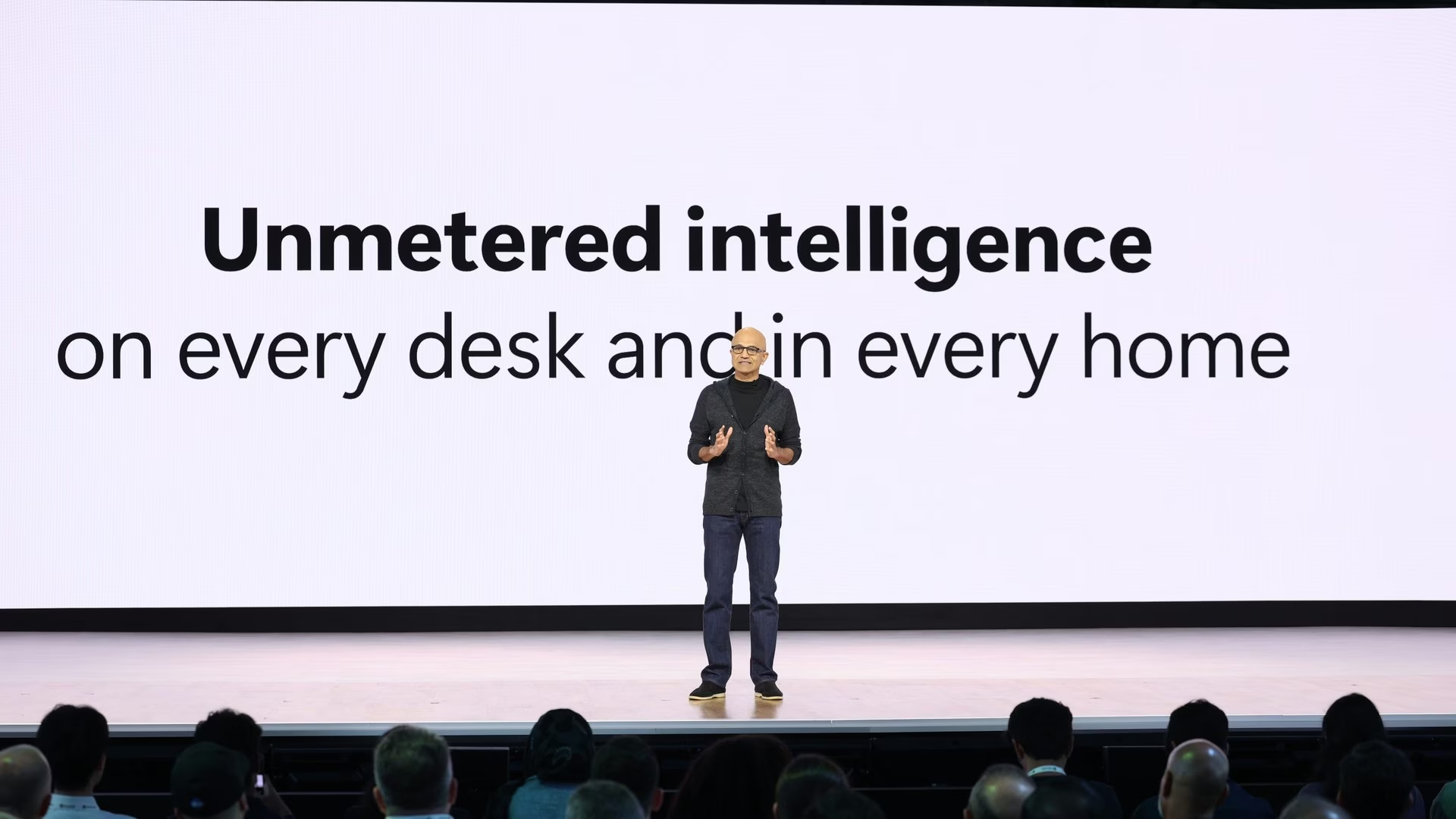
Microsoft chairman and CEO Satya Nadella speaks on stage at Microsoft Build 2026 in San Francisco
Copilot daily users grew nearly 50% in the three months to September, Microsoft chief executive Satya Nadella said. That is more than five times as many as a year earlier. Microsoft still did not say how many people pay for it, Jordan Novet reported for CNBC.
Nadella gave the 50% figure on the company’s earnings call on Wednesday, CNBC reported. He gave it again, with more figures, in a thread on X after the call.
Just wrapped our earnings call. It was a fast start to our fiscal year.
Microsoft Cloud revenue surpassed $63B, with growth accelerating to 30% YoY.
Lots of innovation as we build the new tech stack for the agentic wave. A few highlights:
Satya Nadella (@satyanadella) October 28, 2026
Microsoft has brought Chat, Cowork, Autopilot and Code together in “one unified experience”, Nadella wrote, calling it the biggest update to Copilot so far. The Copilot app first added coding and Autopilot in September. He said user satisfaction rose nearly 20% in the quarter. The number of customers with more than 50,000 Copilot seats grew eight times in a year, he said.
Three months ago, Copilot had about 30 million users, Brody Ford and Matt Day reported for Bloomberg. Fortune described that figure as 30 million paid seats. This quarter, the number of customers paying for Copilot by usage grew more than 75%, Nadella said, as Sebastian Herrera reported for Fortune.
1/ We announced our biggest update to Copilot to date, bringing together Chat, Cowork, Autopilot, and Code into one unified experience:
· Daily users grew nearly 50% QoQ, and more than 5X YoY. · User satisfaction improved nearly 20% QoQ to another all-time high · Number of customers with more than 50K Copilot seats, up 8X YoY
Great momentum with GitHub Copilot too, including Copilot Fusion, announced just this morning, which delivers frontier level quality, at up to 77% lower cost.
And this is just the beginning. The next frontier is maximizing intelligence per task while continuously optimizing for cost and performance.
This is the frontier that will matter to companies!
And we are extending our vision of Copilot as the new OS for work, bringing the business logic and capabilities of D365 directly into Copilot, helping every organization stand up their own infinite SaaS factory.
The high-end Microsoft 365 E7 bundle now has millions of seats, according to CNBC. Chief financial officer Amy Hood gave that figure.
Revenue at Foundry more than tripled in a year, Nadella wrote. He described Foundry as part of the common platform under Microsoft’s own AI products. The number of customers building with several AI models grew five times. Revenue from open-source models grew ten times.
2/ Underneath our 1P experiences is a common platform, starting with Foundry, which is becoming an increasingly important driver of our growth:
· Foundry revenue more than tripled YoY · Number of customers building with multiple models grew 5X YoY · Revenue from open source models increased 10X YoY
We’re also bringing Foundry and Fabric closer together, so customers can build agents right next to their data.
And with Microsoft IQ, we’re making the rich enterprise context underneath Microsoft 365 + Foundry + Fabric available to agentic workloads.
Nearly 60K customers are accessing context across Microsoft IQ, up 25% QoQ.
On the call, Nadella said Microsoft offers customers a range of AI options, Reuters reported. Some cost less than frontier models such as Anthropic’s.
Microsoft is making Copilot more useful with each model release by “consolidating the frontier gains for broad deployment”, Nadella said, according to Reuters.
More than 50 million AI agents now run in Agent 365, which Microsoft uses to help customers secure and govern them, Nadella wrote. That is up 30% in the quarter. Microsoft is linking Agent 365 with Windows so agents can work “within secure boundaries” on a device.
He said agents including OpenAI Codex, Anthropic’s Claude Code and Meta Muse are adopting that system. A feature called Perception enforces identity, permissions, monitoring and containment outside the AI model itself, he wrote.
“We’re separating intelligence from authority,” Nadella wrote.
3/ We’re also helping customers secure and govern their agents at scale.
Over 50M agents are now in A365, up 30% QoQ.
We are bringing together Windows + Agent 365 so agents can work within secure boundaries on-device using MXC.
Agents like OpenAI Codex, Anthropic Claude Code, and Meta Muse are all adopting it.
And with Perception, we’re separating intelligence from authority, enforcing identity, permissions, monitoring and containment outside the model itself.
We’re encouraged by the feedback from preview customers.
Nadella also pointed to GitHub Copilot Fusion, announced that morning. He said it delivers frontier-level quality at up to 77% lower cost.
With expertise in digital marketing, product management, and branding & identity, Ana Maria Constantin develops strategies that resonate (show all) With expertise in digital marketing, product management, and branding & identity, Ana Maria Constantin develops strategies that resonate with our target audience in the software/SaaS industry. Collaboration and teamwork are paramount to her, as she loves empowering her colleagues to achieve outstanding results and unlock their full potential.
Get the most important tech news in your inbox each week.
Thanks! Check your inbox to confirm your subscription.
By subscribing you agree to our Privacy Statement.